

Making collateralized borrowing understandable
Borrowing against crypto assets is stressful. Most DeFi applications make this worse by using confusing text boxes and complex math. If you make a mistake with your numbers, you face liquidation.
Virtue was built on the Liquity protocol and grew with it, from a single collateral asset to multiple collateral types and dynamic interest rates. My goal was to replace static forms with a system where users could see and touch their risk boundaries before moving any money.
My role: I led product direction and designed the full experience, from first flows to final UI. I built the design system and the core interaction patterns, and they held up through multiple protocol versions. That work led the Liquity team to invite us as an official launch partner for their v2 protocol.
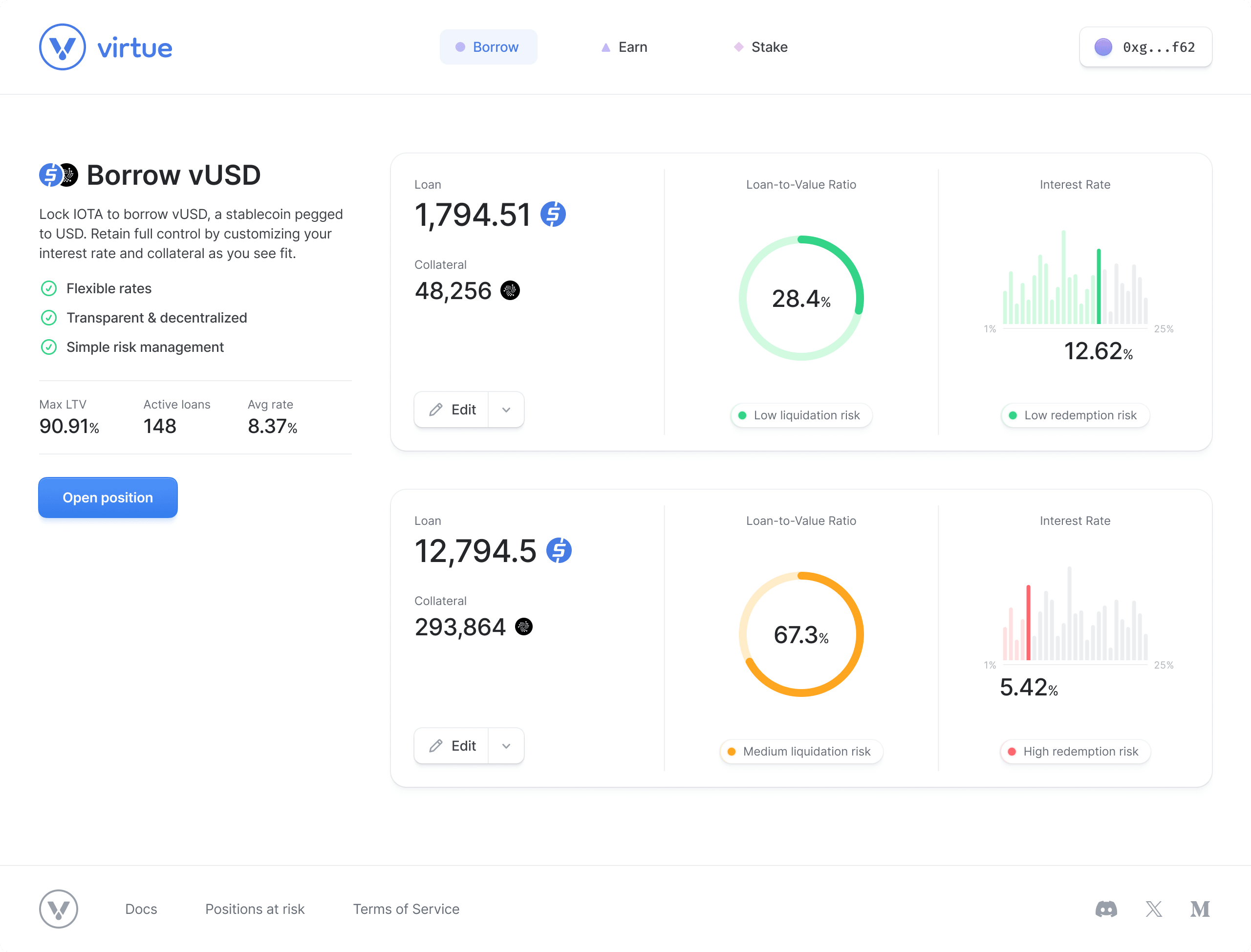
The logic of the bounded range
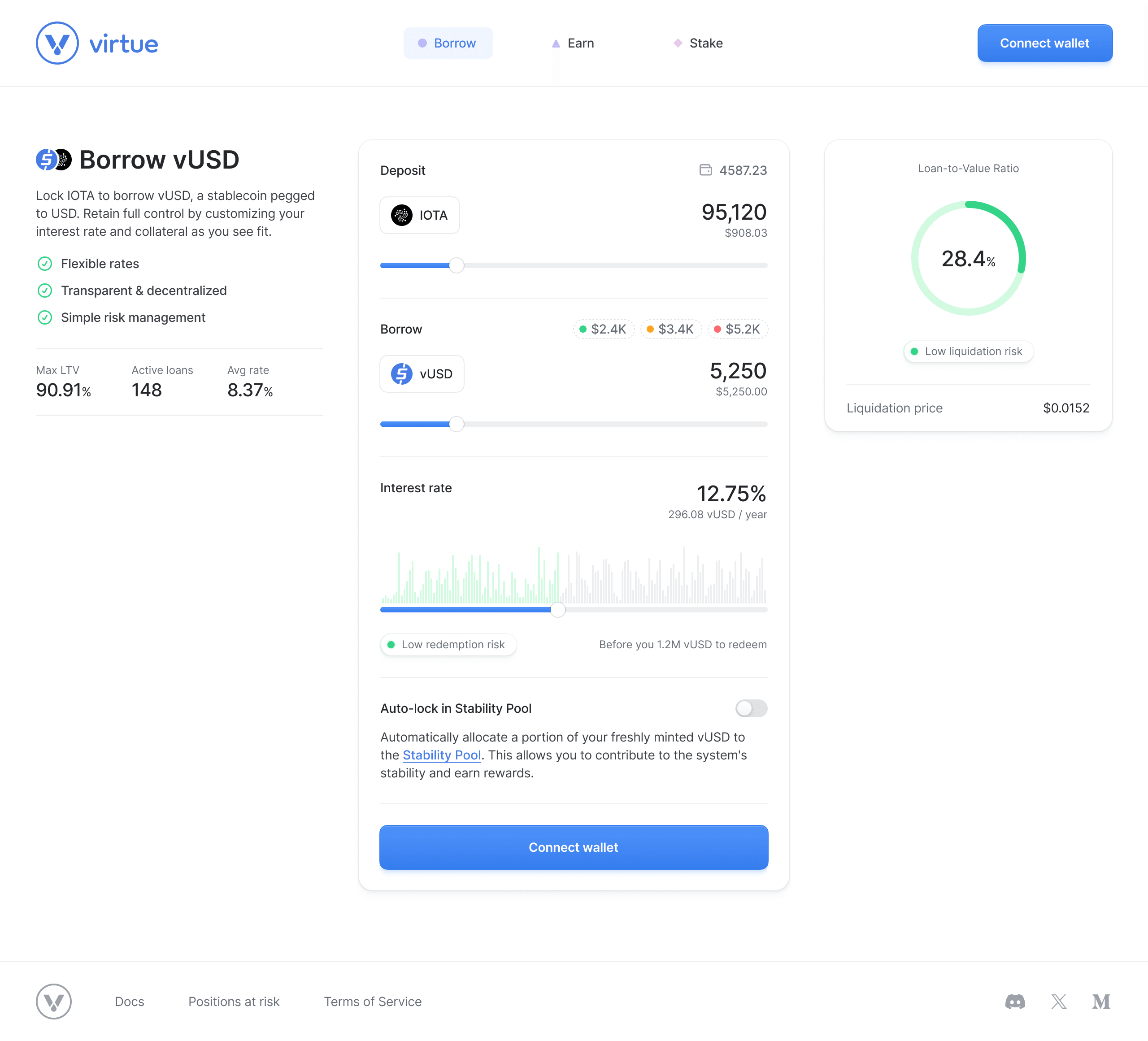
In most lending apps, your collateral is a number you type into a box. In Virtue, it became the starting point of the whole experience. You set collateral with a slider, and that one action shows the limits of the system: how much you can borrow, where the safe zone is, and where the risk starts.
As you move the loan slider, the interface updates your health ratio, liquidation price, and the safety of the position in real time. Borrowing stops being a form you submit and becomes a range you explore before you commit.
One model for everything
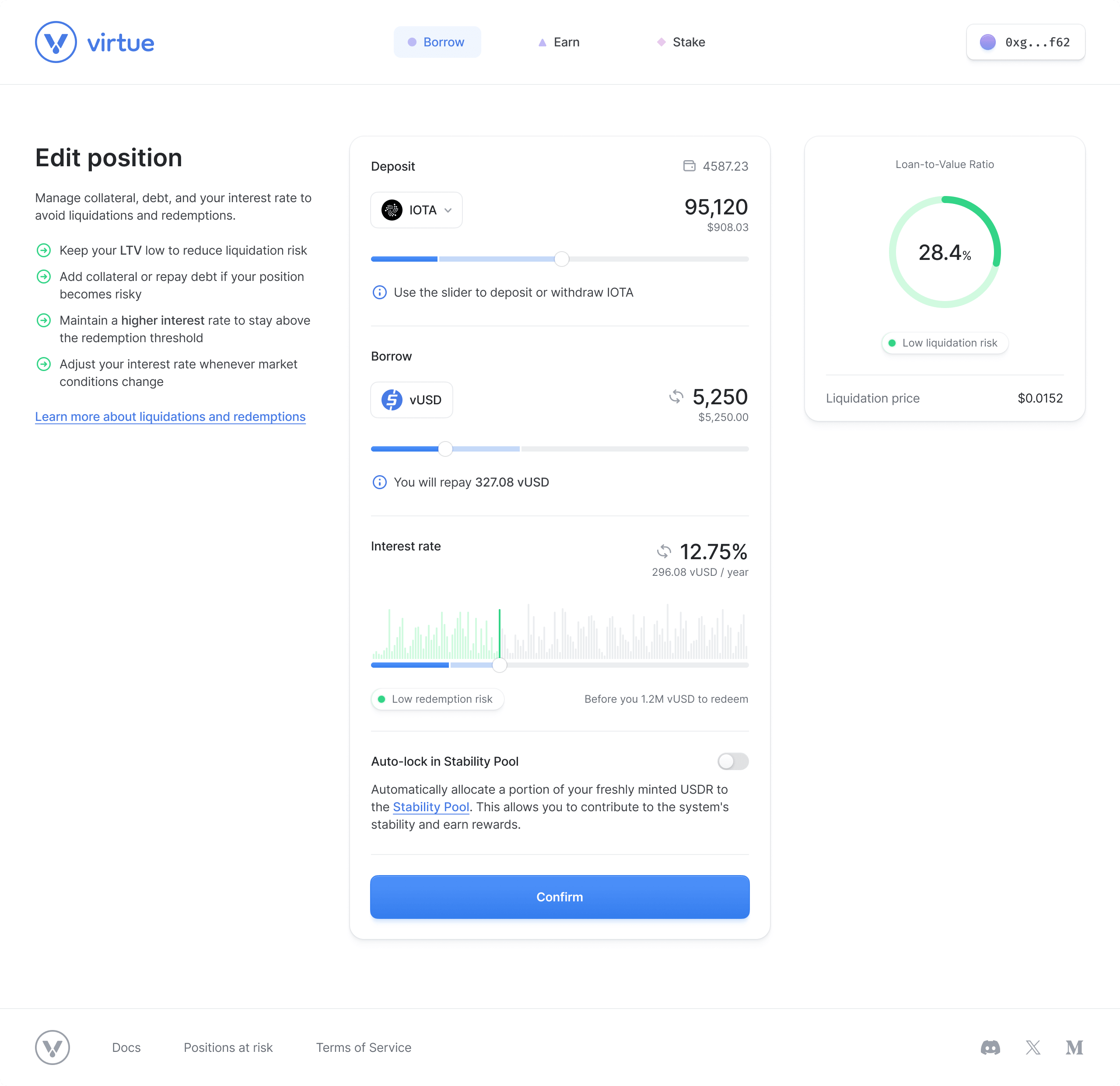
Managing an active loan is usually a mess of separate buttons for depositing, withdrawing, and repaying. In Virtue, editing a position was a continuation of borrowing.
The Edit form was the Borrow form with your current position already on the sliders. To change the loan, you pulled them left or right. Adding collateral, withdrawing it, or repaying debt all used the same motion, so there was nothing new to learn.
Reflection
Shortly before launch, a leadership change handed the project to a different team. They reworked the UI, so the version live today is not the product we built.
The work still shaped how I design complex systems. It proved that smart contract math can be made visual and explorable. Users stopped calculating their risk and started seeing it.